Address
304 North Cardinal
St. Dorchester Center, MA 02124
Work Hours
Monday to Friday: 7AM - 7PM
Weekend: 10AM - 5PM
Address
304 North Cardinal
St. Dorchester Center, MA 02124
Work Hours
Monday to Friday: 7AM - 7PM
Weekend: 10AM - 5PM
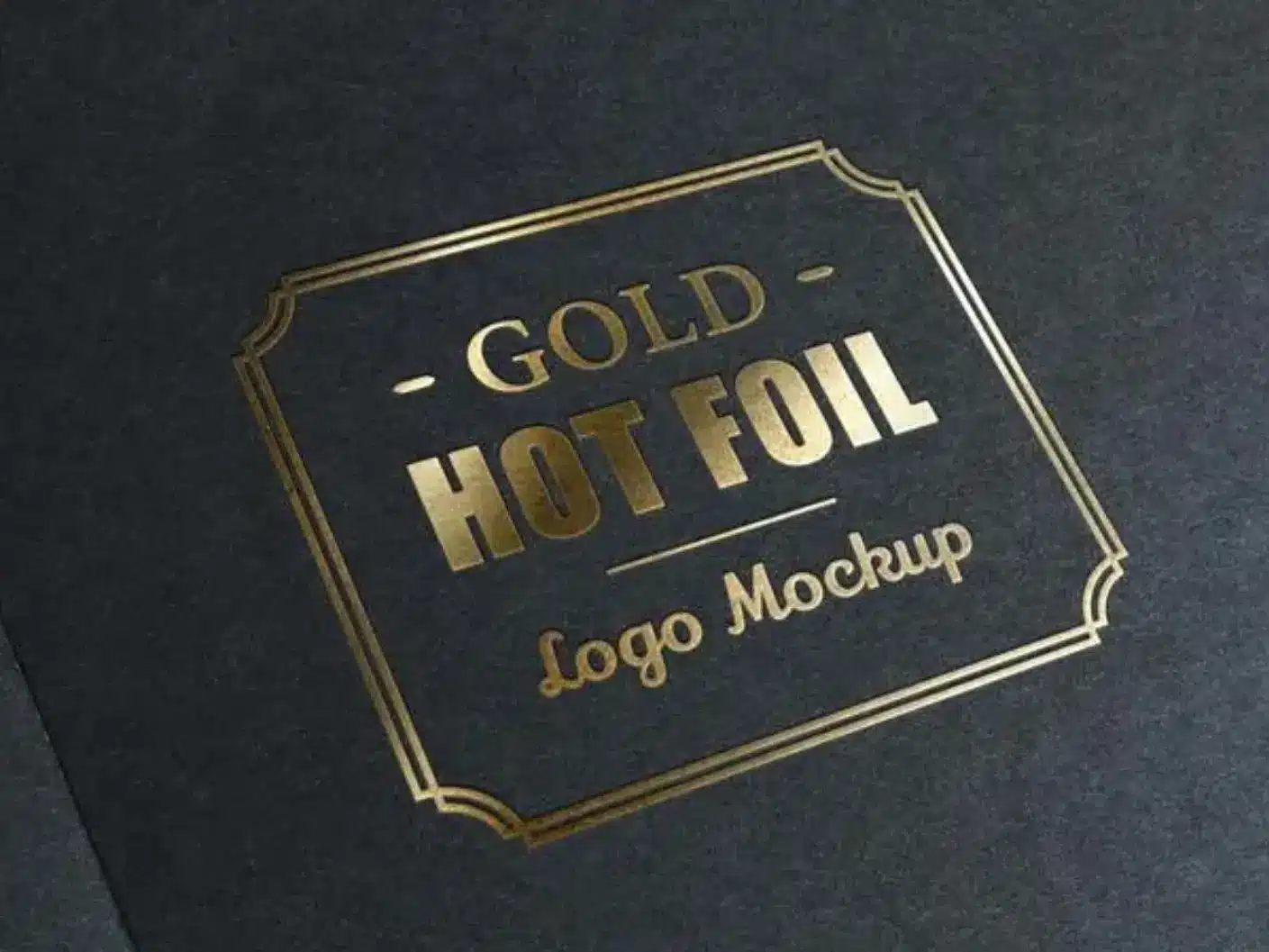
Hot stamping (often called Hot Foil Stamping) is a post-press process that uses the principle of hot-press transfer to transfer an aluminum layer onto the surface of a substrate to create a special metallic effect. Because the main material used is anodized aluminum foil, it is technically referred to as “Anodized Aluminum Hot Stamping.”
While many designers know the look of gold foil, few understand the mechanics behind it. This guide details the structural composition of the foil, its advanced applications on paper, and its specific industrial use on fabrics.
The Material Structure:
What we call “gold foil” is actually a sophisticated multi-layer material. It typically consists of:
The Variety: “Hot Stamping” is a generic term. It does not mean the color must be gold. Available options include Silver, Holographic Gold/Silver, Black, Red, Green, and many more.
In the paper packaging industry, hot stamping is categorized by its application difficulty and function.
This is the most common application, used on gold cards, silver cards, and glass cards. It adds immediate value to packaging.
This involves stamping a specific holographic pattern (like a security seal) in a precise location.
A popular innovation in cigarette labeling and luxury packaging. Instead of stamping on top of ink, we stamp the foil first and then print ink over it.
Hot stamping isn’t just for paper. Since the year 2000, fabric hot stamping has matured into a major industry for fashion and home textiles.
Both the stamping plate and the bottom mold are cylindrical rollers.
Commonly done with pneumatic or manual machines involving two flat metal plates.
Whether on paper or fabric, hot stamping is a balance of temperature, pressure, and time. Understanding these technical constraints helps in designing better products.
Need advice on which foil process fits your project? Contact our technical team for a consultation.