Address
304 North Cardinal
St. Dorchester Center, MA 02124
Work Hours
Monday to Friday: 7AM - 7PM
Weekend: 10AM - 5PM
Address
304 North Cardinal
St. Dorchester Center, MA 02124
Work Hours
Monday to Friday: 7AM - 7PM
Weekend: 10AM - 5PM
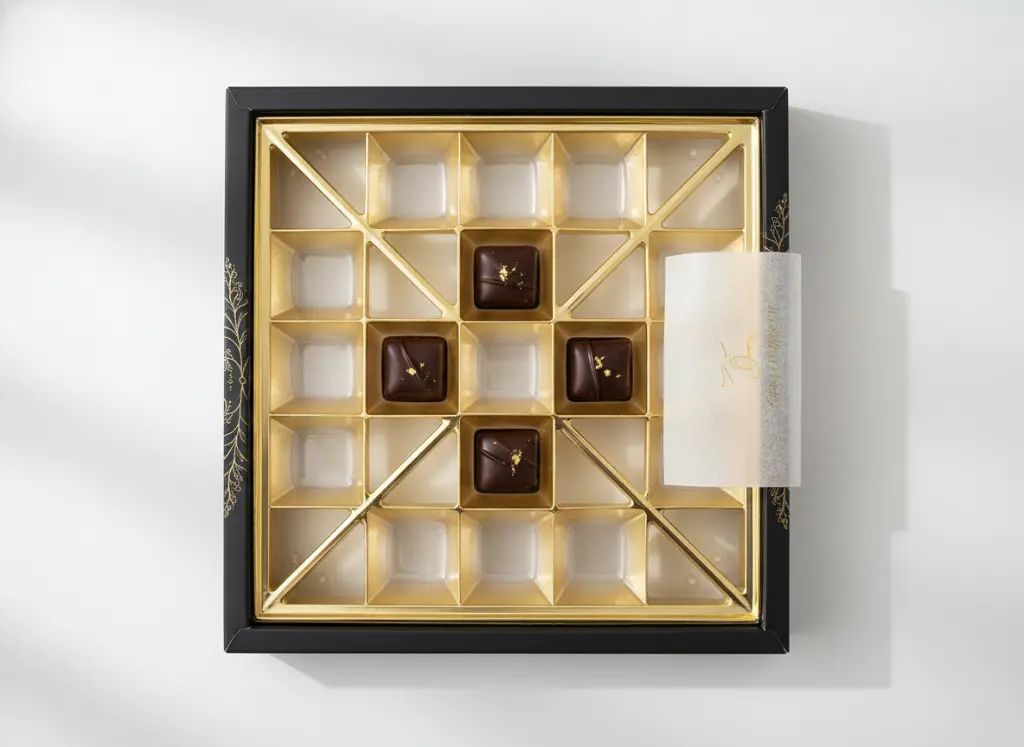
In the world of luxury confectionery, the first “bite” is always taken with the eyes. For brands navigating the competitive landscape of custom chocolate boxes wholesale, the internal structure of the box is just as critical as the exterior graphics. Whether you are housing delicate ganache-filled truffles or hand-painted bonbons, the choice between plastic blister trays and paper-based dividers defines your brand’s stance on luxury, safety, and sustainability.
At Kore Create, we understand that bonbon packaging is a balance of engineering and art. With the global chocolate market valued at approximately $125 billion in 2024, the demand for high-end, protective, and visually stunning packaging has never been higher. This guide explores the technical nuances of internal inserts and finishing techniques that ensure your chocolates arrive in pristine condition.
For decades, the plastic blister tray has been the gold standard for high-volume confectionery production. Its ability to be thermoformed into complex, precise shapes—such as hearts, domes, or even brand logos—makes it indispensable for protecting distinct chocolate geometries.
When sourcing custom chocolate boxes wholesale, the choice of plastic material is paramount for food safety:
Blister trays are no longer limited to basic transparent plastic. At Kore Create, we offer vacuum-metallized finishes in gold, silver, and rose gold. These finishes provide a “jewelry box” feel, reflecting light and enhancing the perceived value of the chocolates.
As consumer awareness regarding plastic waste grows—with recent reports indicating that the sustainable packaging market is growing at a CAGR of nearly 6%—many chocolatiers are pivoting to paper-based solutions. The “nine-square” (or 3×3) grid is a classic example of this trend.
Unlike thermoformed plastic, paper dividers are constructed from interlocking strips of high-GSM (grams per square meter) paperboard. This “grid” system provides several advantages:
For bonbon packaging, these dividers are often paired with individual glassine cups. This combination provides the structure of a grid with the grease-resistance required for high-cocoa-butter products.

One of the most overlooked components in custom chocolate boxes wholesale is the cushion pad. Placed directly beneath the lid, these multi-layer paper pads (typically 3-ply, 5-ply, or 7-ply) serve a dual purpose.
During shipping, chocolates can vibrate or shift within their cavities. A 5-ply cushion pad acts as a shock absorber, preventing the delicate tops of the chocolates from cracking against the rigid lid.
Furthermore, chocolates are rich in cocoa butter, which can migrate or “leach” into the paperboard of the box lid over time, causing unsightly grease stains. High-quality cushion pads are glassine-faced, providing a grease-resistant barrier that keeps the packaging looking fresh and premium until the moment of unboxing.
Data from *Smurfit Kappa* suggests that 82% of consumers have been convinced to buy a product based on a video—and in the confectionery world, the “unboxing” video is king. The reveal of a pristine, branded cushion pad before the chocolates are seen adds a layer of anticipation and professional “finish” that elevates the brand.
To differentiate a brand on the shelf, many designers turn to metallic embellishments. While hot foil stamping is traditional, cold foil stamping is rapidly becoming the preferred method for complex food packaging.

Designing the perfect chocolate box requires more than just a beautiful exterior. It requires a deep understanding of material science—from the food safety of plastic blister trays to the structural integrity of paper dividers and cushion pads.
At Kore Create, we specialize in synthesizing these elements into a cohesive packaging strategy. Whether you are looking to scale your production with high-speed cold foil and PET trays or seeking to lead the market in sustainability with interlocking paper grids, our team is equipped to bring your vision to life.
The future of the chocolate industry is premium, personalized, and protected. Ensure your packaging reflects the quality of the craftsmanship inside.
Ready to elevate your confectionery brand? Contact Kore Create today to discuss our wholesale options for custom chocolate packaging and internal tray solutions.